
Introduction
Football is a game built on rivalry. It thrives on passion, tribal loyalty, and the ruthless pursuit of victory. From local derbies to Champions League finals, players and managers are taught that winning is everything.
Records define legacies. Trophies shape history. And defeat is often treated as failure.
Yet beneath the noise, the tension, and the obsession with results, football has always had another side.
Sportsmanship in football is not about weakness or surrender — it is about strength of character. It is the ability to respect an opponent in the heat of competition, to recognise greatness even when it comes at your own expense, and to remember that football, at its core, is played by human beings.
Across eras, leagues, and rivalries, there have been moments when players, managers, and fans chose dignity over hostility. When they stepped beyond the badge, the scoreboard, and the rivalry to honour effort, talent, and humanity.
This article explores 10 powerful moments of sportsmanship in football, where respect mattered more than winning — moments that remind us why the game is called the beautiful game.
1. Jürgen Klopp Shows Respect to Thibaut Courtois
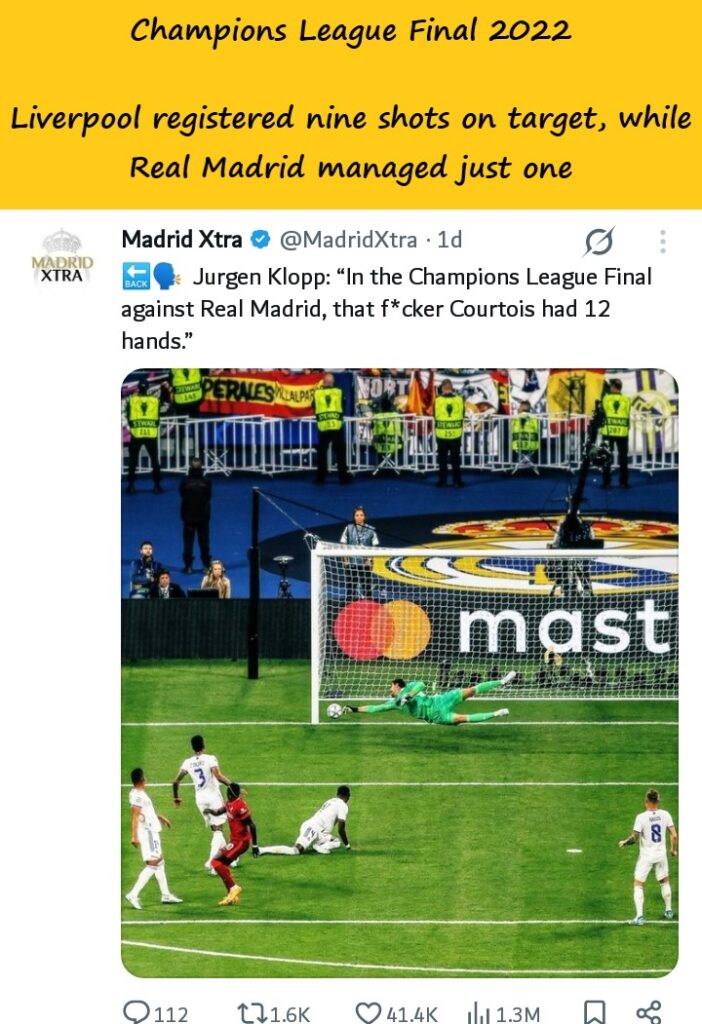
Few defeats sting more than losing a Champions League final — especially when you dominate the match. Liverpool’s 1–0 loss to Real Madrid in the 2022 UEFA Champions League final was one of those nights where football felt brutally unfair.
Jürgen Klopp watched his side pepper Thibaut Courtois’ goal relentlessly. Liverpool registered nine shots on target, while Real Madrid managed just one — the Vinícius Júnior finish in the 59th minute that decided the biggest game in club football. On paper, it was domination. On the scoreboard, it was defeat.
After the match, Klopp’s frustration was unmistakable, but so was his honesty. Speaking about Courtois’ extraordinary performance, the Liverpool manager famously joked that the Belgian goalkeeper had “12 hands.”
“We play that game and we shoot every three minutes on their goal, but their ‘keeper has 12 hands.”
Klopp dissected the final with brutal clarity. He admitted Liverpool made one defensive mistake — and Real Madrid punished it. But what truly separated the two sides was Courtois’ superhuman goalkeeping display. Klopp even noted that Madrid were out of position multiple times, yet Liverpool failed to capitalize.
In a moment of raw emotion, Klopp referred to Courtois with a profanity — not out of disrespect, but out of sheer admiration born from frustration.
“The other guys were in the wrong position 23 times and we didn’t punish them. That has nothing to do with their defending — that was that ****er Courtois.”
It was a perfect snapshot of football sportsmanship. A defeated manager, emotionally honest, openly crediting the opponent who denied him glory. Klopp didn’t hide behind excuses. He didn’t deflect blame. He accepted reality — that one goalkeeper decided a Champions League final.
That acknowledgment, even in anger, was pure respect. And that is what true sportsmanship in football looks like.
2. Lazio Fans Salute Francesco Totti
Few rivalries in world football burn with the intensity of Roma vs Lazio. The Derby della Capitale — also known as the Derby di Roma, Derby Capitolino, or Derby del Cupolone — is not just a football match. It is identity, politics, history, and emotion colliding inside one city.
This is not to diminish iconic English rivalries like Manchester United vs Liverpool, Manchester United vs Manchester City, or Arsenal vs Tottenham Hotspur. But Rome’s derby exists on a different emotional frequency.
It is deeply rooted in history and ideology, dating back to 1927, when three Roman clubs were merged to form AS Roma — a move backed by Benito Mussolini in an attempt to create a single Roman powerhouse capable of challenging the dominance of northern Italian clubs.
Lazio refused. Named after the Lazio region itself, the club chose independence over compromise. That decision ignited a rivalry that has since been stained by decades of violence, riots, injuries, and even deaths, often overshadowing the football itself. The Derby della Capitale became one of the most volatile fixtures in global sport.
And then, there was Francesco Totti.
A symbol of loyalty in the modern game, Totti was a technically gifted, creative attacking playmaker capable of operating as an attacking midfielder or forward.
He was not just Roma’s captain — he was Roma. Totti remains the club’s all-time top scorer, the most capped player in AS Roma’s history, the highest scorer in Serie A history for a single club, and the youngest captain the league has ever seen.
To Roman football, he was more than a player. He was mythology. Italian media crowned him Er Bimbo de Oro (The Golden Boy), Er Pupone (The Big Baby), L’Ottavo Re di Roma (The Eighth King of Rome), L’Imperatore (The Emperor), and most famously, Er Capitano (The Captain). In 2013, The New York Times captured it best, describing Totti as a “Roman god in his game.”
So when the moment came for Francesco Totti to retire — fittingly in a match involving Lazio — football witnessed something extraordinary.
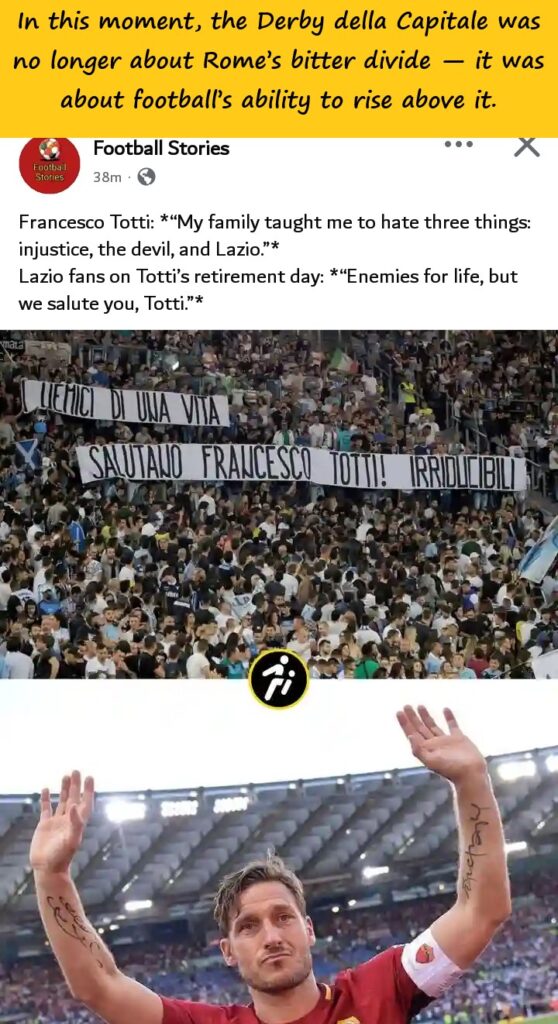
Despite a lifetime of hostility, Lazio supporters held up a banner that read:
“Enemies for life, but we respect you, Totti.”
It was a breathtaking act of sportsmanship. Especially considering Totti himself had once famously declared:
“My family taught me to hate three things: injustice, the devil, and Lazio.”
In a rivalry defined by hatred, violence, and division, Lazio fans chose respect. They separated rivalry from humanity. They honored greatness, even when it wore the colors of their eternal enemy.
In that moment, the Derby della Capitale was no longer about Rome’s bitter divide — it was about football’s ability to rise above it.
3. Cole Palmer’s Admiration for Kobbie Mainoo
At first glance, it would be easy to assume Cole Palmer’s affection for Kobbie Mainoo is rooted purely in international familiarity.
Both are England internationals, products of elite academies (Manchester United and Manchester City), and representatives of the new generation of Premier League talent. But their bond revealed something deeper — especially when club rivalries should have erased all warmth.
During the 2025–26 Premier League season, when Manchester United hosted Chelsea at Old Trafford in September 2025, the intensity of the fixture left little room for sentimentality. United claimed a 2–1 victory, but one defining moment came away from the scoreboard.
By that point, Cole Palmer had already established himself as a key figure in Chelsea’s starting XI, carrying creative responsibility and attacking output. Kobbie Mainoo, by contrast, was enduring one of the most difficult periods of his young career.
Once hailed as Manchester United’s midfield future, the teenage midfielder had unexpectedly found himself on the fringes under then-manager Ruben Amorim.
What followed was a turbulent chapter. Mainoo’s omission became a public talking point, drawing intense scrutiny and emotional strain.
The situation spilled beyond the pitch, with his family stepping into the spotlight — most notably when his brother wore a “Free Kobbie Mainoo” shirt, a silent protest against what many fans viewed as harsh and unjust treatment.
In a moment when confidence was fragile and belief was fading, recognition arrived from the most unlikely place.
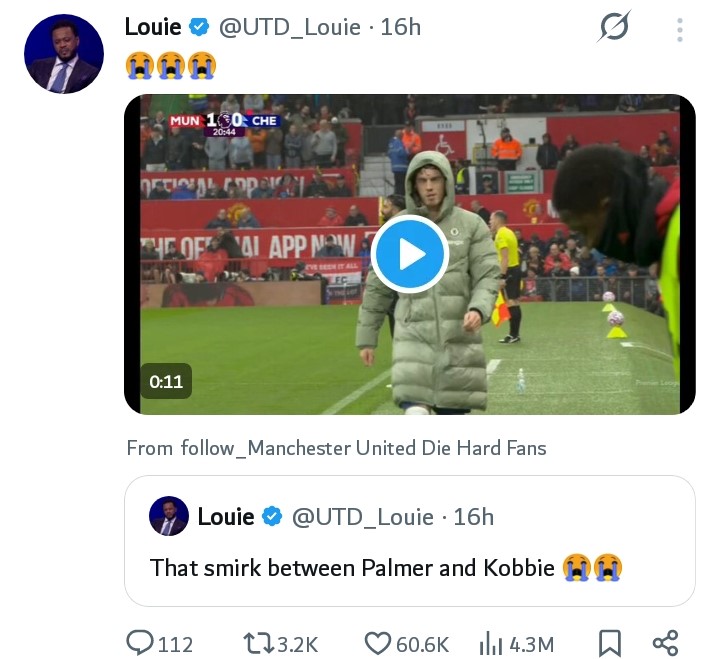
As the match raged on and emotions boiled over, Palmer and Mainoo crossed paths while warming up along the touchline. There was no grand gesture. No cameras sought it out. Just a smile, a quick handshake, and a quiet exchange of respect between two rivals wearing different colours.
It was a small moment, but a powerful one.
In the middle of a fiercely contested Premier League clash — Chelsea versus Manchester United — Cole Palmer chose empathy over rivalry. He acknowledged the human behind the shirt. For Kobbie Mainoo, it was a reminder that his talent was still seen, still respected, and still valued.
That brief interaction captured the essence of sportsmanship in football: when players recognize each other not as opponents, but as professionals navigating the same pressures, expectations, and emotional weight of the modern game.
4. José Mourinho Protects a Chelsea Player from His Own Fans
José Mourinho has been sacked by Chelsea twice. In modern football logic, that history alone would justify resentment, distance, or at the very least indifference. By the time Mourinho found himself in the opposing dugout — now managing Benfica — few would have expected him to lift a finger in defense of anything Chelsea-related.
Yet football, once again, proved it is bigger than grudges.
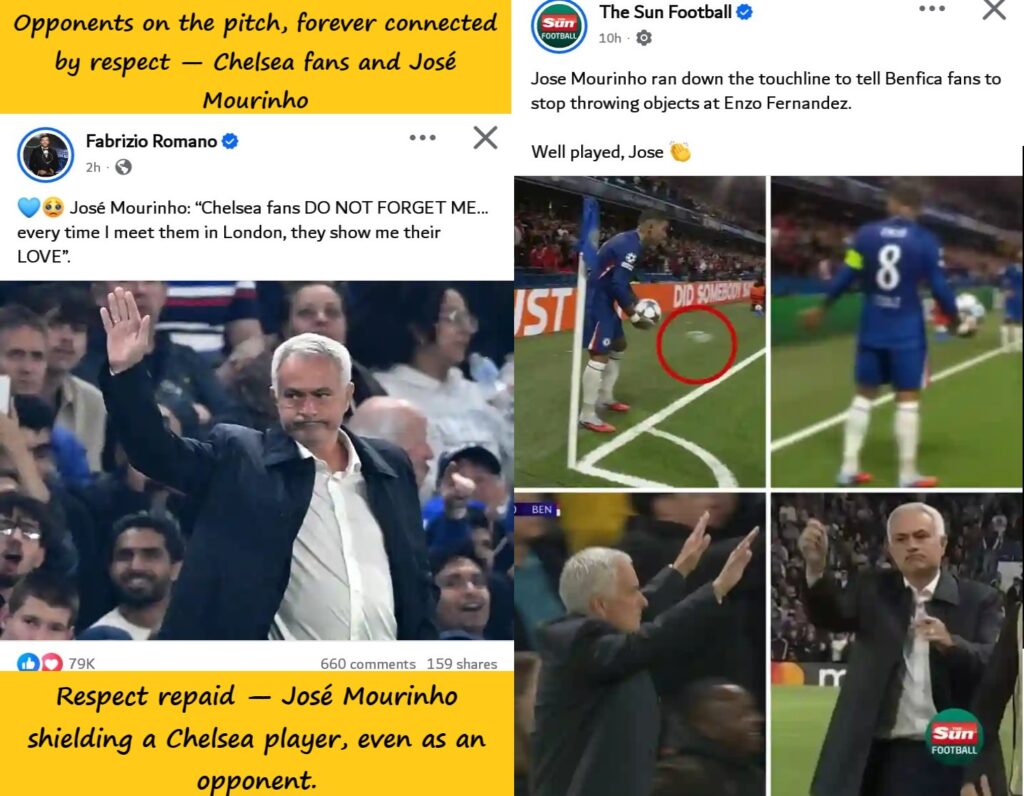
When Chelsea hosted Benfica at Stamford Bridge in the UEFA Champions League, tensions inevitably rose. One man bore the full weight of that hostility: Enzo Fernández. Once a Benfica player and now wearing Chelsea blue, Enzo became a lightning rod for anger when he went to take a corner kick in front of the Benfica away supporters.
Objects were thrown. Whistles rang out. The atmosphere turned ugly.
What followed was extraordinary.
Instead of ignoring the situation — or quietly enjoying the discomfort of a Chelsea player — José Mourinho intervened. The Benfica manager walked toward his own supporters and personally asked them to stop. He demanded that they allow Enzo Fernández to take the corner in peace.
And they listened.
For neutral fans watching, it was a moment that cut through tribalism. Mourinho had no obligation to act. If anything, history suggested he might feel detached from Chelsea’s interests. But instead, he chose authority, responsibility, and respect — even if it meant confronting his own fans.
The irony was unmistakable. Enzo Fernández did not leave Benfica on good terms. His departure was controversial, emotional, and bitter. Benfica president Rui Costa publicly criticized the midfielder in 2023, stating:
“He showed no commitment to Benfica. Here I thought he couldn’t play for Benfica anymore. As a fan, I didn’t want this player anymore. As a manager it wasn’t a solution either, and he couldn’t enter the locker room again. That’s when I made the decision to let him go.”
Given that context, the hostility from Benfica supporters was hardly surprising.
What was surprising — and deeply admirable — was Mourinho’s response.
A manager defending a player from the very club that dismissed him twice. A self-proclaimed winner choosing values over vendettas. Mourinho reminded everyone that football rivalry must never cross into personal abuse or physical danger.
In that moment at Stamford Bridge, José Mourinho wasn’t Chelsea or Benfica. He was football’s conscience — protecting a player, setting boundaries, and proving that true sportsmanship sometimes means standing against your own crowd.
5. Alejandro Garnacho Shows Respect by Collecting a Manchester United Shirt
Alejandro Garnacho’s relationship with Manchester United did not end quietly. His fallout with former United head coach Ruben Amorim became public, emotional, and deeply divisive — ultimately forcing a high-profile move to Chelsea ahead of the 2025–26 season.
Unlike many players who mask their intentions, Garnacho was unapologetically open about his desire to leave Old Trafford. In June 2025, while on holiday, he posted a photo of himself wearing an Aston Villa shirt with Marcus Rashford’s name on the back. To Manchester United supporters, it felt provocative — a deliberate act of disrespect from a player they once adored.
Tensions escalated further after United’s Europa League final defeat in May 2025, where Garnacho featured only briefly as a late substitute. Shortly after, his brother publicly accused Amorim of “throwing him under the bus”, amplifying the perception that bridges had been burned.
Among United fans, patience evaporated. Many felt Garnacho had disrespected the club that elevated him to global recognition. One supporter summed up the mood bluntly: “Amorim got a lot wrong, but getting rid of Garnacho was the right decision.”
Online backlash was ruthless. On X, fans labelled him “petulant” and “childish.” Reddit threads accused him of flaunting a lifestyle built by the club while simultaneously mocking it. “Crazy ego — get him out,” read one widely shared comment. For many, the narrative was settled.
Yet football, once again, proved more nuanced than social media outrage.
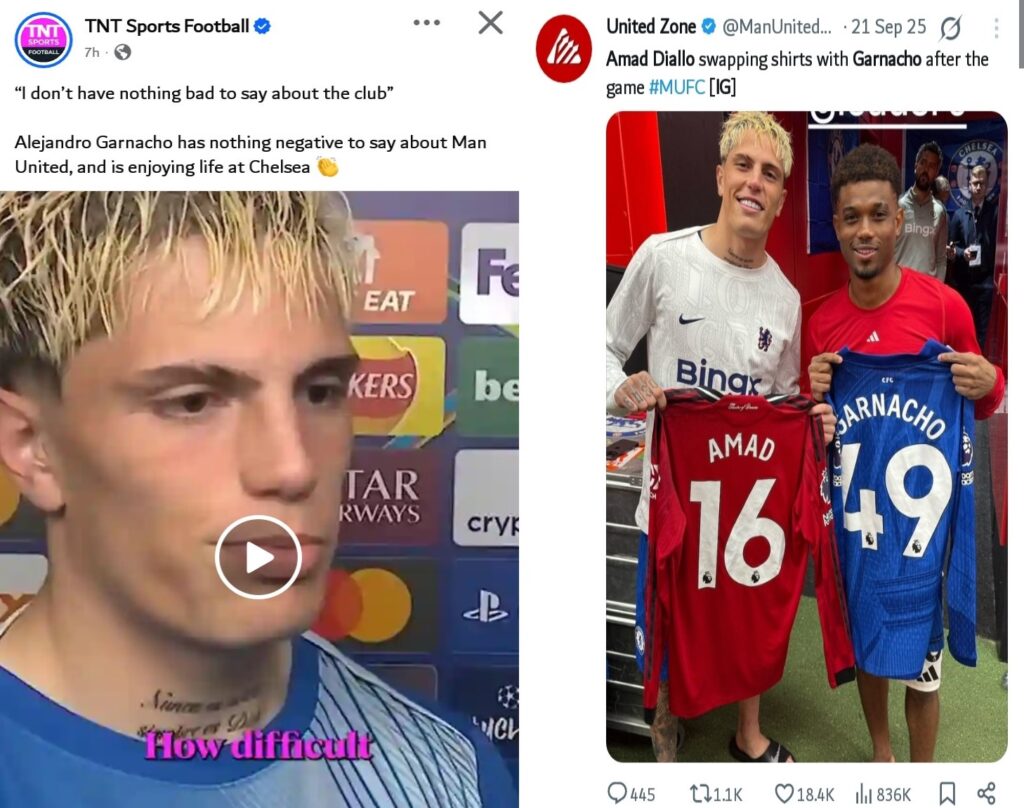
When Chelsea faced Manchester United in September 2025, Garnacho handled himself with striking professionalism. In pre-match media duties, he made it clear he held no bitterness toward Manchester United, repeatedly acknowledging the club’s role in his development and rise to prominence.
Then came the moment that reframed everything.
After the final whistle, Garnacho approached Amad Diallo and asked for his Manchester United shirt. The two posed for a photo — a simple exchange rooted in mutual respect rather than rivalry. Garnacho did not hesitate to share the image online, making a clear statement: the badge he once wore still mattered.
He harbored no resentment toward the shirt. No ill will toward former teammates. No desire to erase his past.
Ironically, the backlash shifted direction. Some United supporters turned on Amad Diallo for posting the photo with Garnacho, interpreting it as disrespectful following a hard-fought 2–1 victory. The reaction was so intense that Amad deleted the post, prompting Manchester United to step in and offer support, prioritizing the player’s well-being while acknowledging the innocence of the gesture.
In the end, what stood out wasn’t bitterness — it was maturity.
Garnacho, despite a turbulent exit, showed that respect for a former club does not vanish with a transfer. He separated professional disagreements from personal pride, reminding everyone that footballers can move on without erasing their history.
In an era dominated by ego and online outrage, that quiet act of respect mattered.
6. Diego Costa and Martin Škrtel Reignite a 10-Year Feud — Then Bury It After the Match
During his peak years at Chelsea, Diego Costa built a reputation as football’s ultimate antagonist. He thrived on confrontation, thrived on chaos, and made a career out of unsettling defenders. Fouls, arguments, mind games — they were all part of his striker’s toolkit.
Few rivalries defined that era better than Costa’s battles with Liverpool centre-back Martin Škrtel.
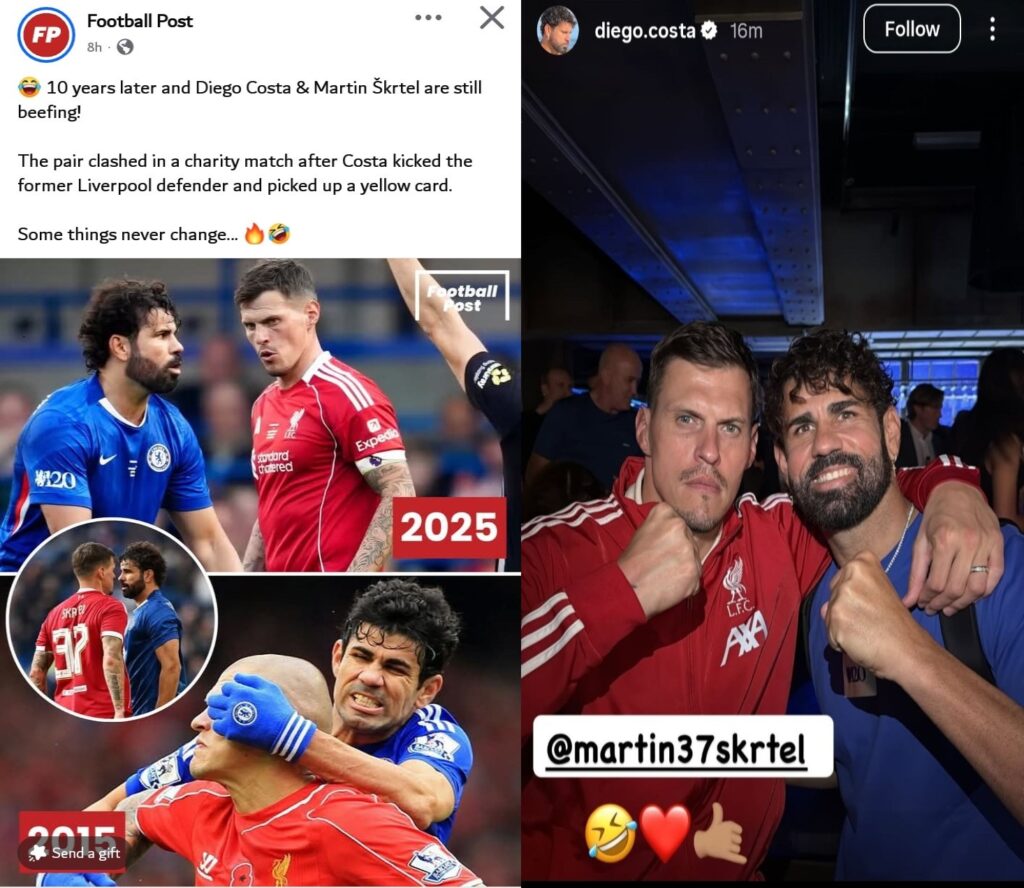
Their Premier League clashes were raw, physical, and personal. Elbows flew. Tempers flared. Respect was scarce. A decade later, memories of that feud were unexpectedly reignited when the two crossed paths again — this time in a legends match at Stamford Bridge.
For a moment, time stood still.
Costa, now 37, seemed to slip effortlessly back into character. After being on the receiving end of a rough but fair tackle from Škrtel, the former Chelsea striker reacted instantly. Words were exchanged. Arms waved. The tension was unmistakable.
Škrtel, clearly unimpressed, pointed an accusatory finger at Costa. For a brief flash, both men appeared to forget the context — that this was a friendly exhibition match, played for nostalgia rather than points.
For fans, it was pure déjà vu. A reminder of two Premier League warriors who once defined the league’s most combustible moments.
But the real story came after the final whistle.
Just hours later, the edge softened. The anger faded. The rivalry dissolved into laughter. Costa posted an image to his Instagram story showing the two former adversaries locked in an embrace, fists raised playfully toward the camera, accompanied by a laughing emoji and a red heart.
It was symbolic. Two veterans acknowledging what time teaches every footballer — that battles stay on the pitch, not beyond it.
In the end, Diego Costa and Martin Škrtel delivered a powerful message. Fierce rivalry does not have to become lifelong resentment. Football’s fiercest duels can still end in mutual respect.
Because sometimes, the most meaningful act of sportsmanship isn’t what happens during the game — it’s what happens when the game is over.
7. Pep Guardiola’s Love for Football Transcends Club Rivalry
On 5 November, Pep Guardiola’s Manchester City delivered a commanding 4–1 victory over Borussia Dortmund at the Etihad Stadium in the UEFA Champions League. Goals from Phil Foden (two), Erling Haaland, and Rayan Cherki sealed a performance that underlined City’s tactical superiority on the night.
At full-time, logic suggested only one outcome. Guardiola celebrating with his players. Applause for the fans. A brief acknowledgment of the result before turning attention to the next fixture.
But Pep Guardiola has never been driven solely by results.
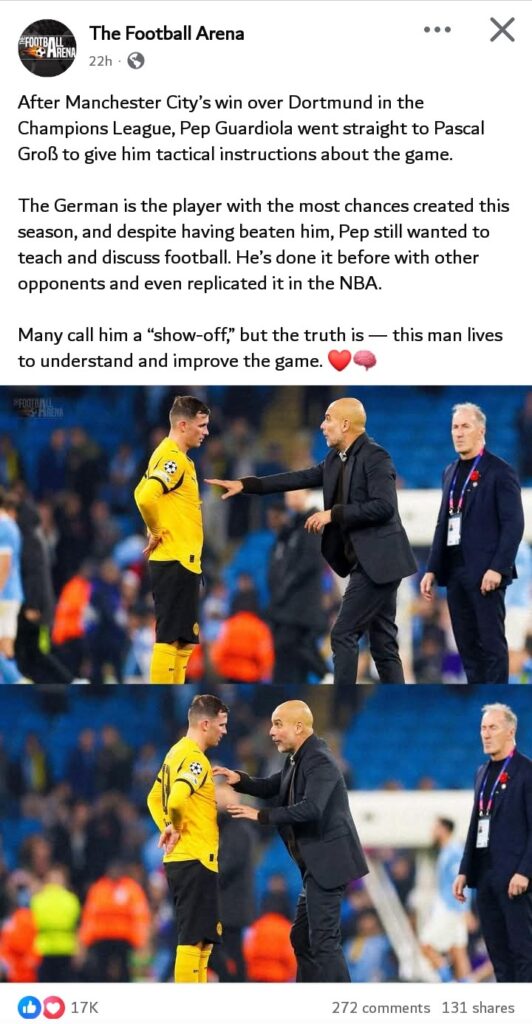
Instead of retreating to the touchline or tunnel, the Manchester City manager did something entirely unexpected. He ran onto the pitch — not to congratulate his own team, but to speak with Borussia Dortmund midfielder Pascal Groß.
For nearly two minutes, Guardiola animatedly offered tactical advice, gesturing, explaining, dissecting positioning and decision-making. Groß stood there, fully engaged, listening intently, eager to absorb every detail — despite having just been on the receiving end of a heavy defeat.
It was a striking image.
Here was a manager who had spent an entire week preparing to dismantle Dortmund — now openly helping one of their players improve. Rivalry dissolved. Competition paused. Football took centre stage.
To some, it might look like arrogance. To others, a show of dominance. But for those who understand Guardiola, it was neither. This was a man obsessed with the game itself — its patterns, its intelligence, its evolution.
As one football fan perfectly summed it up: Some may call it showing off, but this man lives to understand football — and to make it better.
In that moment, Pep Guardiola wasn’t Manchester City’s manager. He was football’s student and teacher, rolled into one. And by sharing knowledge rather than hoarding it, he reminded everyone that the beautiful game grows when its best minds choose generosity over rivalry.
Keep it up, Pep. You don’t just win games — you elevate the game itself.
8. Jürgen Klopp Congratulates Pep Guardiola on His 1,000th Game in Management
Football rivalries do not always end at the final whistle. In many cases, they linger for decades — even after managers retire. Some feuds become so personal that reconciliation never arrives.
The most obvious example is José Mourinho and Arsène Wenger. Their rivalry was deeply acrimonious, defined by public insults and long-standing resentment. Mourinho once branded Wenger a “specialist in failure,” while Wenger later deliberately omitted Mourinho from his autobiography, explaining that he wanted a positive book focused on his own journey rather than “sorting out differences.” Mourinho, unsurprisingly, was unimpressed:
“You wouldn’t write an entire chapter about 14 matches you never won, not even one! So why would he mention me in his book?”
That bitterness stood in stark contrast to what football witnessed between Jürgen Klopp and Pep Guardiola.
Their rivalry gave modern football one of its most demanding and tactically intense eras. Liverpool versus Manchester City under Klopp and Guardiola was not just competition — it was attrition. Every league season went down to microscopic margins. Every head-to-head clash felt like a final.
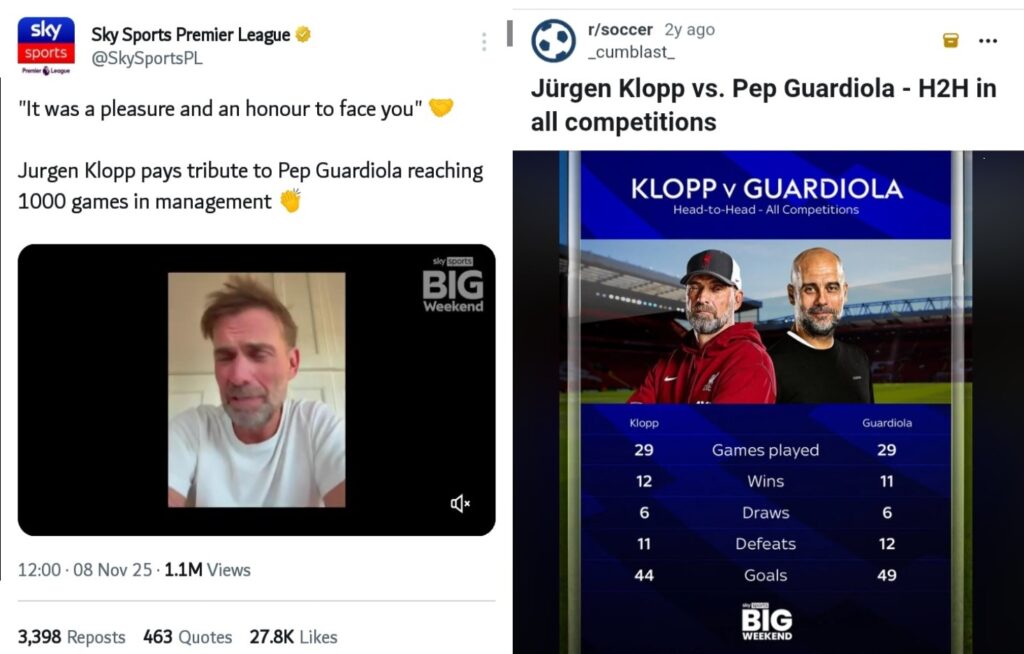
Across 29 meetings, Klopp won 12, Guardiola won 11, and the rest were draws — numbers that reflect just how evenly matched they were. The Premier League became a psychological and physical grind, pushing both managers and squads to historic levels.
So intense was the battle that Klopp eventually admitted the toll was too heavy. He walked away from Liverpool, openly acknowledging that he had run out of energy after years of relentless pressure at the top.
And yet, when Pep Guardiola reached 1,000 games in management just the other day there was no silence. No cold distance. No buried resentment.
Instead, Klopp publicly congratulated Guardiola — openly, warmly, and without hesitation. A gesture that put respect ahead of rivalry, and humanity ahead of competition.
In that moment, their history of fierce battles was set aside. What remained was recognition — of longevity, excellence, and shared sacrifice.
It was a reminder that football is bigger than trophies and touchline wars. That behind the tactical chess matches are human beings who understand exactly what it takes to survive at the highest level.
Moments like these prove that while football thrives on rivalry, it is respect that gives the game its soul.
9. Dan Burn and Kai Havertz Put Rivalry Aside and Share a Drink
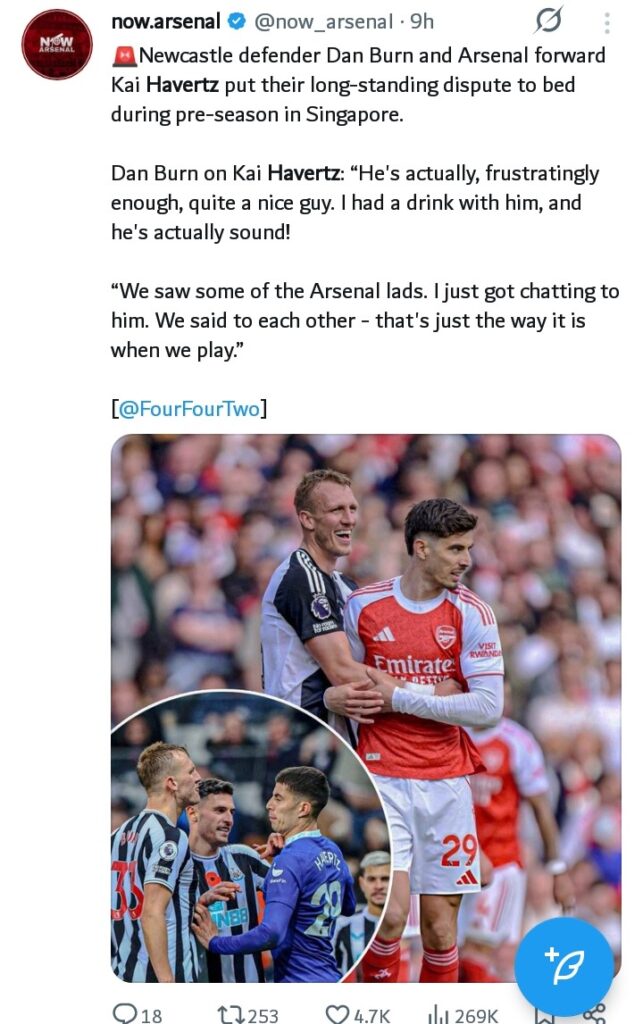
Kai Havertz is the kind of forward defenders dread. His movement around the penalty area is clever and unpredictable. He combines pace with height, intelligence with physical presence. In short, he is a problem — especially in tight Premier League matches where one lapse of concentration can be decisive.
One defender who knows that struggle all too well is Newcastle United’s Dan Burn.
Their competitive tension dates back to Havertz’s Chelsea days, long before the German international joined Arsenal. Every meeting was a battle — aerial duels, physical clashes, and constant frustration as Burn tried to contain Havertz’s intelligent off-the-ball movement.
But football rivalry does not always define personal relationships.
When Newcastle United and Arsenal crossed paths in Singapore during pre-season friendlies, the environment was different. The stakes were lower. The pressure was gone. And something unexpected happened.
The two adversaries sat down together and shared a drink.
Speaking about the moment, Burn admitted that his perception of Havertz changed completely. The striker he had spent seasons battling against turned out to be someone entirely different off the pitch.
“He is actually, frustratingly enough, quite a nice guy,” Burn said.
“I had a drink with him, and he is actually sound. We said to each other — that is just the way it is when we play.”
It was a simple exchange, but one that captured football’s human side. On the pitch, they are opponents fighting for every inch. Off it, they are professionals who understand the line between competition and personal respect.
In a sport often defined by grudges and confrontation, Dan Burn and Kai Havertz reminded us that rivalries can exist without resentment — and that sometimes, all it takes to dissolve tension is a conversation and a drink.
10. Alan Shearer Congratulates Erling Haaland for Breaking His Premier League Record
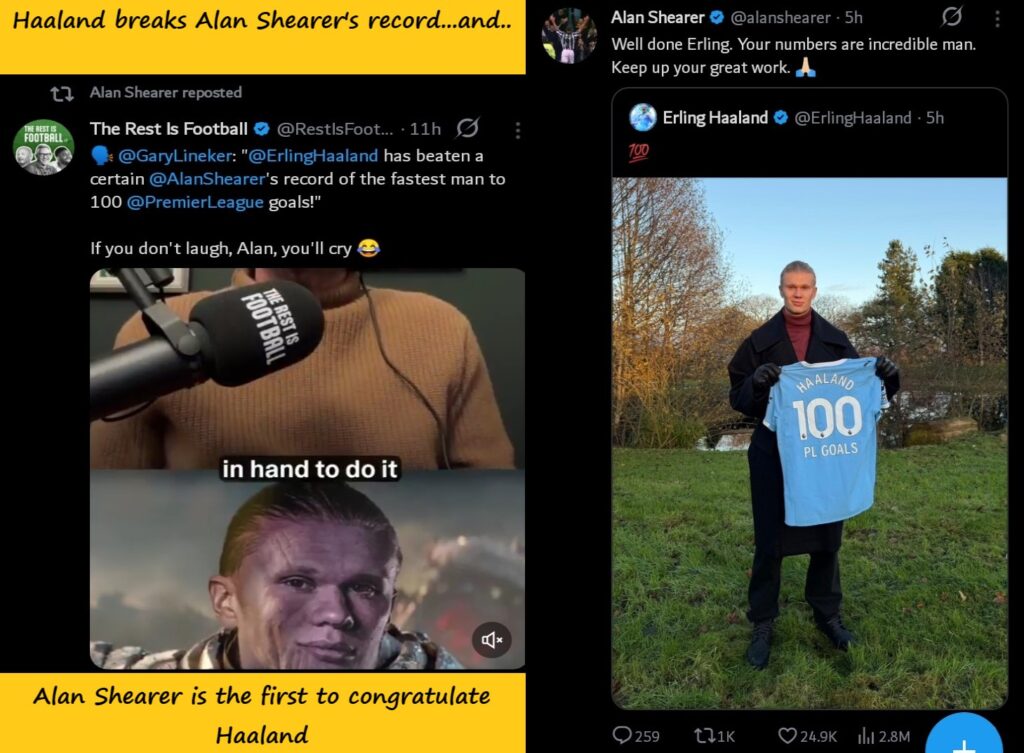
Records in football are personal. They are earned through years of sacrifice, pain, and relentless excellence. And few records carried more weight in the Premier League than Alan Shearer’s mark as the fastest player to reach 100 league goals — a benchmark that stood untouched for years.
That was until the 2025–26 season, when Erling Haaland rewrote history.
The Manchester City striker, already redefining what dominance looks like in English football, surged past the milestone and eclipsed Shearer’s record. For many former players, moments like that can be uncomfortable — especially when legacy is involved.
Television pundit Gary Lineker couldn’t resist poking fun, teasing Shearer about his record falling. But the Premier League’s greatest goalscorer responded in the best way possible — with grace.
Instead of deflection or bitterness, Alan Shearer went straight to X and publicly congratulated Haaland. His message was short, sincere, and revealing:
“Well done Erling. Your numbers are incredible man. Keep up your great work.”
The reaction from football fans was immediate. In an era where former legends often protect their records jealously, Shearer chose appreciation over ego. He recognised greatness when he saw it — even when it meant watching his own name slip down the record books.
Earlier, some online fans had attempted to taunt him, posting remarks like “If you don’t laugh, Alan, you will cry.” But Shearer never flinched. He handled the moment with the composure of someone who truly loves the game.
Long after retirement, Alan Shearer showed that football greatness isn’t just about goals scored — it’s about how you respond when someone comes along and scores even more.
That is sportsmanship at its purest.
Conclusion
Football will always be about winning. That will never change — nor should it. The hunger to compete, to dominate, and to succeed is what makes the sport extraordinary. But when winning becomes the only measure of greatness, something vital is lost.
The moments we remember longest are not always goals or trophies.
They are Jürgen Klopp applauding an opponent who broke his heart, Lazio fans honouring Roma’s greatest icon, rivals sharing a handshake in the middle of adversity, managers protecting players from abuse, legends congratulating records that eclipse their own, and enemies choosing respect over resentment.
These stories show that sportsmanship in football is not accidental — it is a choice. A decision to rise above ego, rivalry, and bitterness. A reminder that football is not just a contest, but a shared language understood across cultures, generations, and allegiances.
In a sport increasingly shaped by money, outrage, and online division, sportsmanship remains football’s moral compass. It preserves the soul of the game.
Because long after the final whistle blows, respect is what truly lasts.
Leave a Reply